
Margaret's Monthly: Book Review Column
By Margaret Dalbey | May 26, 2026
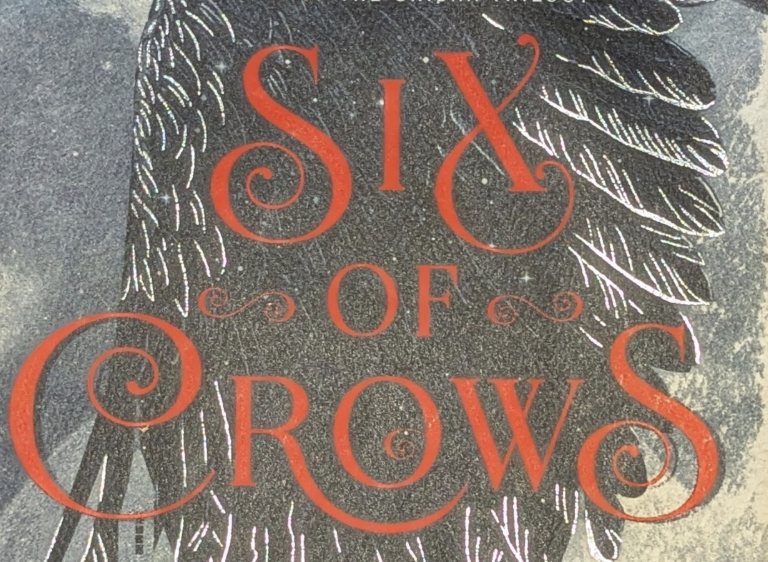
Six of Crows book cover
“No mourners. No funerals.” — Six of Crows, Leigh Bardugo
General Info
Book Name: Six of Crows
Author: Leigh Bardugo
Year Published: 2015
Genres: Fiction, Fantasy
Synopsis
A part of the Shadow and Bone universe (also known as the Grishaverse), Six of Crows is the first of a duology that follows a crew of six teenage thieves through the dangerous city of Ketterdam. As we follow the journey of the “Crows,” we learn the history and watch the future unfold for Kaz Brekker, leader of the Crows and criminal prodigy; Inej Ghafa, a spy who lives in the shadows but believes in the Saints; Jesper Fahey, sharpshooter and gambler; Wylan Van Eck, a socially awkward bomb-maker new to the streets; Nina Zenik, a stubborn Grisha Heartrender; and Matthias Helvar, a stone-cold Fjerdan and former Grisha hunter.
Kaz brings the Crows together for a once-in-a-lifetime opportunity: a heist to break into the world’s most secure prison with the heaviest military presence. Will they succeed, or kill each other trying?
Review
Overall Rating: ★★★★★★★★★☆
World-Building: 4 / 5 Stars
When the story begins, we are introduced to the way people with supposedly all the power — the Grisha with magical abilities — are still indentured to the wealthy. We learn about the growing tension between the rich and powerful and the poor and struggling, about gang leaders with secrets and connections to Kaz Brekker and his crew.
We are placed in the minds and hearts of each Crow. Through Inej’s perspective, we learn how the rest of Ketterdam perceives Kaz (“Dirtyhands,” “Bastard of the Barrel”). As the crew figures out their plan to break into the Ice Court, we are constantly left on cliffhangers, desperate to keep reading to discover if the plan succeeds, if the relationships work out, and if someone is going to die.
This style of world-building through individual perspectives is extremely effective in keeping the reader hooked and invested in the world. However, there are some points during the infiltration of the Ice Court where the explanation of the location and logistics becomes a little fuzzy, but this is a minor issue that only takes a reread to fully comprehend.
One thing Bardugo executes especially well is plot consistency. If you read the Shadow and Bone trilogy, you’ll notice that Six of Crows implicitly shows the long-term impact of the ending of that series. Even if you haven’t read the first three books, the plot within Six of Crows remains consistent. Nothing happens without an ultimate motive or reason.
Characters: 4.8 / 5 Stars
I enjoy the characterization of each of the Crows, but my favorite character is Inej. Her ruthlessness, balanced with a soft spot for the Saints and for protecting those she loves, makes her incredibly compelling. She is a trained fighter, and yet she doesn’t kill. She fights an internal conflict between allowing herself emotional closeness and choosing to find “home” after being torn away from it too soon.
Kaz becomes a close second with his perceived detachment, which is really a projection of brutality used for self-preservation. But there is a crack in his armor when too much love seeps into his being, forcing him to confront how much he cares about the others and how terrified he is when they are in danger. Not to mention, Kaz is a genius and the mastermind behind the heists.
Wylan functions as an unknown factor because we never see his perspective in Six of Crows, but that makes him even more intriguing, especially when everything is revealed at the end. His character becomes even more fully developed in the second book, Crooked Kingdom.
Character Complexity: 4.1 / 5 Stars
Each character has a heartbreaking backstory that makes you root for them even more, but at times it does become a little like, “Did nobody get a happy childhood?” I understand that it’s necessary for their development and long-term arcs, but some of the characters’ complexity was slightly predictable.
I did appreciate the representations of emotional and physical abuse, exploitation, and complicated parental relationships. The antagonists in Six of Crows are formidable, extremely hateable, and secretive in a way that slowly unfolds throughout the heist, leaving you on the edge of your seat.
Relationships: 5 / 5 Stars
The relationships between Inej and Kaz, Nina and Matthias, and Wylan and Jesper are emotionally devastating and wonderful explorations into the difficulty of relationships.
Bardugo dives into several slow-burn romances while also creating, over time, a found-family dynamic between all six kids whose own families are lost, dead, or never truly known. There are snide comments, flirtatious moments, worried stares, constant teasing during stressful situations, and subconscious urges to protect each other.
Originality: 4 / 5 Stars
While magic systems and found-family dynamics are popular tropes, the specific plot points throughout the heist are full of unexpected twists, and the larger structure of the world is unique in its design.
The Grishaverse, with its classification of the Small Science into Corporalki, Etherealki, and Materialki, differentiates itself from popular media like Harry Potter, Doctor Strange, anime, and fairy tales, though it does resemble Avatar: The Last Airbender in its use of elemental powers.
Although the found-family trope is frequently used in popular media, Bardugo does an excellent job developing the hardships the characters endure in order to bond.
Additionally, I enjoyed that the countries are loosely inspired by real-world regions. According to the Grishaverse Fandom Wiki: Ravka is inspired by Russia, Fjerda by Scandinavia or Norway, Shu Han by East Asia, the Wandering Isle by Ireland, Novyi Zem by Africa and the African diaspora, and the Suli by South Asia.
This means that places like Kerch and Ketterdam feel like melting pots where people from different walks of life coexist in unstable conditions. My only critique is that this setup risks homogenization, especially when there are several countries representing different European nations but broader regions representing large groups of non-European cultures.
However, Bardugo does an adequate job of individuating the main characters beyond their countries of origin.
Writing: 3.8 / 5 Stars
The writing is extremely detailed, painting vivid pictures of every setting we enter. Bardugo’s dialogue is youthful and easy to follow, appealing to younger audiences with dramatic and emotional lines.
She uses a variety of literary devices, such as similes like “chandeliers that floated like jellyfish” and metaphors like “Brekker had claws and not fingers because he was part demon.” She also uses graphic language that can occasionally become overwhelming during high-tension scenes, but overall the language is a net positive, providing rich descriptions of both characters and settings.
Bardugo uses a third-person omniscient point of view throughout the novel, shifting perspectives between characters from chapter to chapter. This gives readers insight into the minds of the characters and the reasoning behind their decisions, while also maintaining suspense whenever a Crow makes a questionable choice and the perspective suddenly cuts away.
Appraisal
All in all, Leigh Bardugo does a phenomenal job transforming words on a page into the fantastical world of the Grishaverse with, in my opinion, some of the most interesting characters in modern YA fantasy.
The Crows are a ragtag, unlikely crew of disregarded members of society, each carrying mysterious histories and forming new connections along the way. While the story isn’t entirely original, the familiar tropes and allusions help readers quickly invest in the world and its relationships.
Six of Crows will make you laugh, pull at your heartstrings, spark tears in your eyes, and entertain you from beginning to end.
Photo from Unsplash