
Generative AI versus Real Life: What is Reality?
By Alex Miller | July 17, 2026
As of May 2025, 52% of newly published online articles were generated using artificial intelligence, according to data reported by Futurism. Unfortunately, many people who use social media fall for AI-generated content because of how prevalent it has become. As AI-generated content continues to spread online, it is becoming more difficult for people to distinguish what is real from what is fake.
AI images have become a widespread trend across the internet in the past couple of years. As more people find them on their social media home pages, it’s clear to see how they are replacing human-made content. This is especially worrying when it comes to knowing what is real and what is fake. AI has improved so much that the quality of the images is comparable to that of actual photographs. The confusion between the two has led to false information being spread and has even begun to endanger the reliability of online sources. An example of this would be the AI-generated image of Pope Francis wearing a Balenciaga jacket or the variety of fake photos circulating around Facebook, many of which people have believed and taken as fact.
Generative AI has been improving over time. As it feeds on our algorithms, the content generated feels closer to a real image. It’s been getting progressively harder to identify AI-generated content, and it’s even harder for people with lower screen time. Data gathered from our various interviews show that people who spend less time on the internet struggle with detecting AI images.
We interviewed multiple students from Baltimore City College and Baltimore Polytechnic Institute and showed them real images next to AI images, asking them which one was fake. The images pictured below are an example:
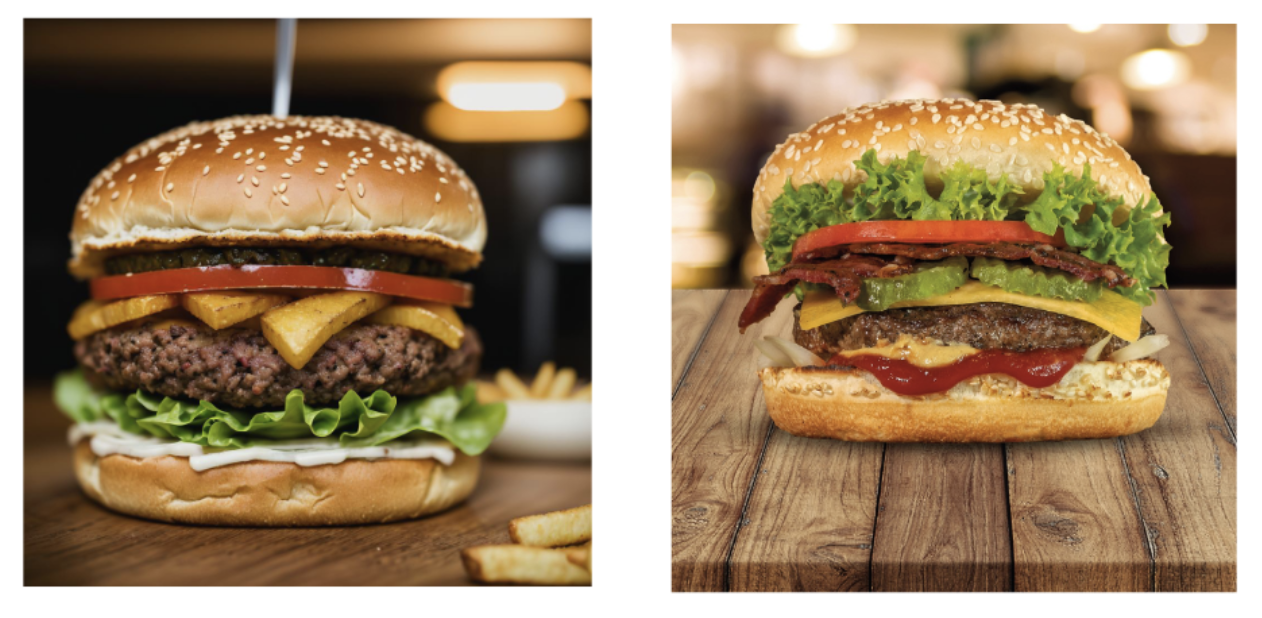
The one on the left is AI and the one on the right is real. Most of the interviewees could tell that the burger on the left was AI. Theodore M. gave the reasoning that “The burger seems like plastic, the way the cheese sits on it.” But what about something a bit more difficult, like a human face?

Like before, the one on the left is AI-generated, and the one on the right is human. This one was a lot tougher for the people we interviewed to figure out. They felt like the AI one was just a higher-quality photo of a real person. Anonymous correctly said it was AI and said that they knew because “his skin is way too clear.” David J. said, “The AI has little details like the hair and the lighting that look incorrect.”
Overall, most images were quite difficult for people to tell which was which. As AI advances, it has become harder to tell what is real and what isn’t. Not being able to detect AI causes paranoia. People online will call real things AI and AI things real. This is a growing issue because, at some point, we won’t be able to differentiate between AI- and human-made content.
Yet, as scary as the takeover of AI is, there is still hope that our recognition of reality will grow alongside the improvement of computers. AI can never perfectly replicate humanity, after all. As one interviewee put it, “The AI has no soul. It doesn’t seem like there was any intent behind it.”