Inside the World of Student Robotics
By Jack Basl | April 27, 2026
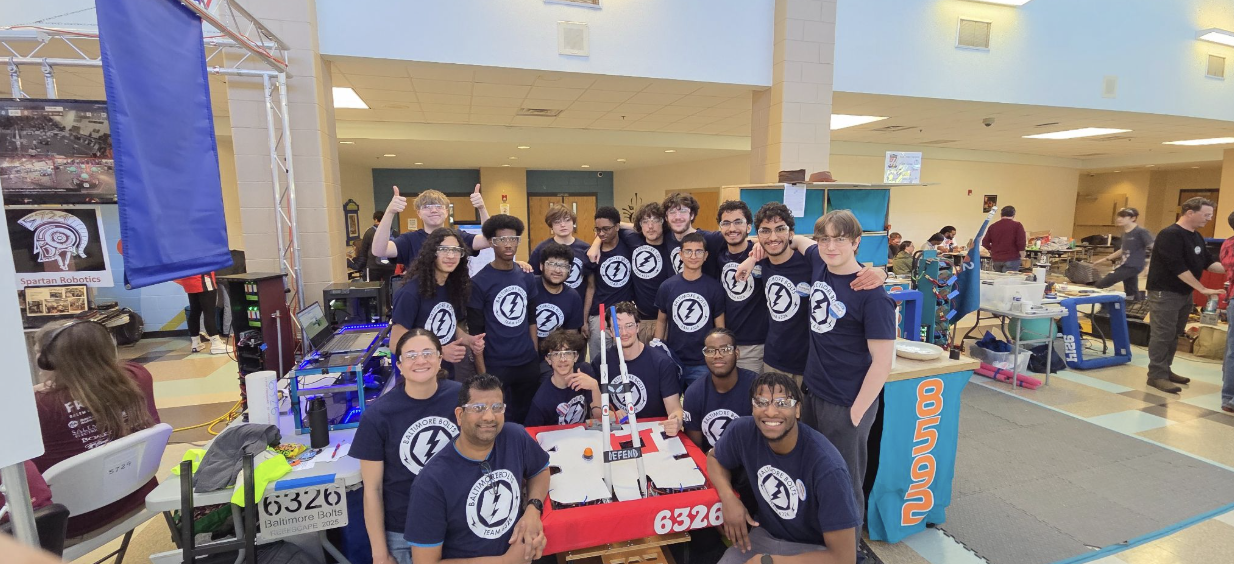
Photo of The Baltimore Bolts community robotics team
If you enjoy robotics, would you want to further your 3D modeling, technical, and coding skills?
Jayesh Jariwala is the head mentor of the Baltimore-based community robotics team, The Baltimore Bolts, and a control systems engineer. He guides and teaches his students through every step of the robot creation process.
He has been mentoring the Bolts for nine years, and this will be his 16th year coaching robotics. He is an expert on the steps to becoming a skilled roboticist, engineer, and competitor. “I found it exciting to work with students and teach them skills in engineering,” said Coach Jayesh.
Robotics is a wonderful pathway to learning software, physical, and coding skills. Having the right teacher, you could also discover how to build different parts for your robot on your own. It also forces you to learn and use your social skills due to working with a team to complete tasks. The combination of all these attributes allows you to work well with others to prepare your robot for competition.
There are many different types of robotics competitions. These events are ones in which your robot competes by itself or as part of a team, completing a course or playing a game while going against another robot at the same time. The outcome of these events is decided by how well you put the skills you gained to use when designing, building, and coding your robot.
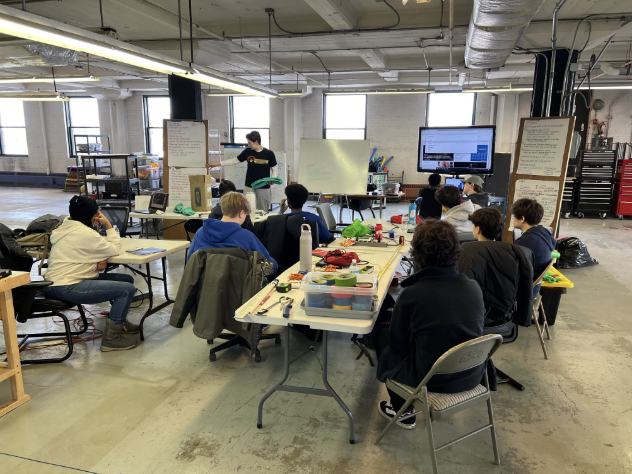
The first step to any good robot is design. The design process is where all ideas are thrown into the ring to see which meet the goals you or your teammates are trying to achieve. “What is the problem, the game, what the competition is about. Breaking down the individual tasks and figuring out how the game is played, what is important,” Coach Jayesh states about the competition aspect of robotics. “Deciding what an optimal robot is, what we are capable of, and what we want to strive for.”
There are usually many parts to a game, and the team then has to brainstorm the best way to handle them. Once the basic parts of a robot are brainstormed, they are split among the team, with small groups of students diving deeper and iterating more thoroughly without having to focus on the other parts. Of course, you have to occasionally take a step back to see how your sub-groups are helping to achieve the overall goal of playing the game.
This year, many of the robot’s mechanisms work together. Each sub-team must work together so the game piece can move from the intake to the shooter at the other end of the robot.
With a design in place, the next step in the design process is prototyping. “Prototypes are a great way to see how things fit. We do this in CAD and in wood. Be willing to throw things away and start over again,” Coach Jayesh noted.
For those who don’t know, CAD stands for computer-aided design and is a great way to see the robot in its entirety, using half as much time and no materials compared to building an actual prototype.
CAD and making physical models out of wood give the Bolts a visual and physical representation of what could be, while also warning about the challenges, limitations, and setbacks the team might encounter when building the full-scale robot from metal, polycarbonate, and other costly materials. That way, we don’t waste materials.
The ability to traverse CAD can take some time, but once you understand the basics, everything else falls into place. The Baltimore Bolts teach CAD to all the members who don’t know and want to learn during the offseason, so they can be prepared for the next season. The software my team uses for CADing is called Onshape.
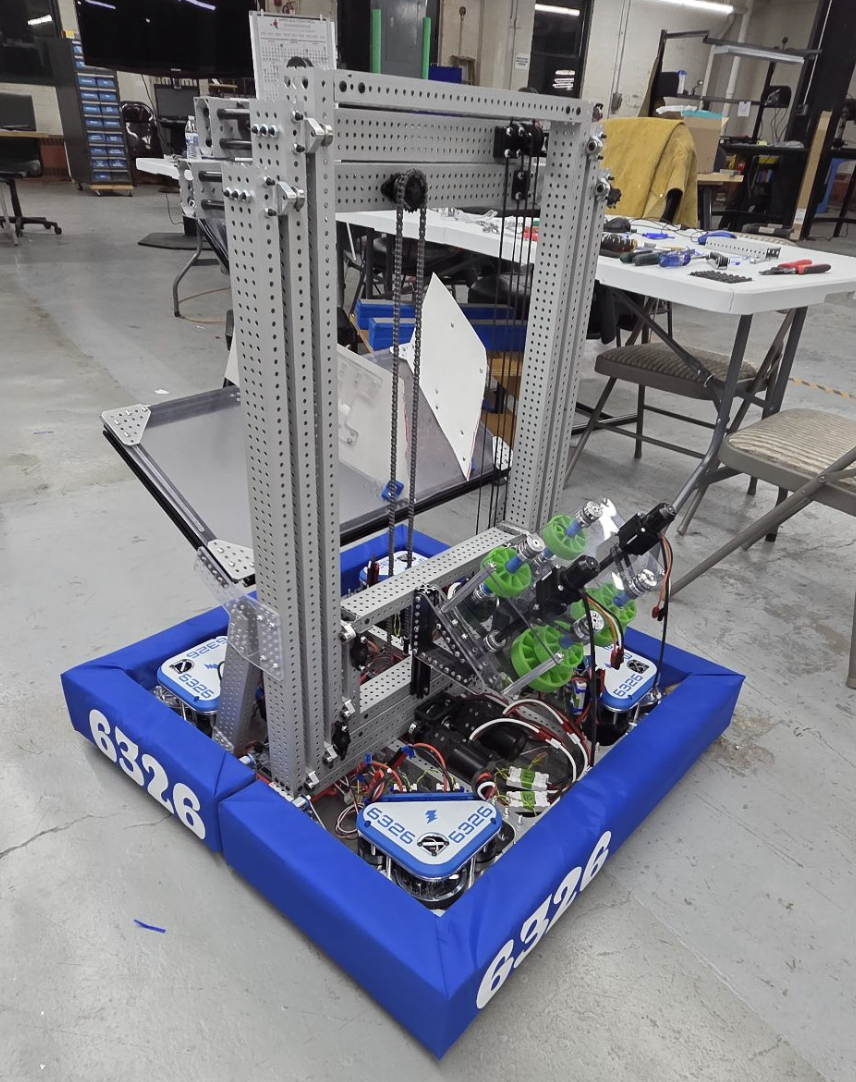
From there, construction of your robot can be either the hardest or the easiest, depending on how well you designed and prototyped your robot in the previous stage. This doesn’t just include building the parts out of metal; this includes all the electrical components as well. Now, I won’t get into the nitty-gritty of electrical components, but know that every motor or sensor must be wired to the robot’s brain, which can be challenging if there are many moving parts on your robot. This may cause you to go back and change your design, but that is okay because now you know that you need to take the electrical components into account.
Now, to get all the motors to spin, the sensors to gather input, and put it to use, the team needs to program the robot. This can be hard or easy, depending on whether you or any of your team members have a basic idea of coding. Fortunately, there are most definitely hundreds, if not thousands, of tutorials and step-by-step guides on how to code a robot, so there is no need to stress too much if you don’t know how to code. However, the next step might cause you some stress.
Testing is one of the most important parts of the process. “The most important step, test your ideas and be open to new ideas,” Coach Jayesh voiced. Testing can and should put stress on your robot and can potentially stress you out, but it is better for something to break where it is easy to rebuild and improve than at a competition. This is also where all the buggy code starts to rear its head, which, if severe enough, could break a part of the robot. Testing is where you see what works and what does not. It is the best way to learn what you can do better next time so it does not happen again. It allows you to prepare for the worst.
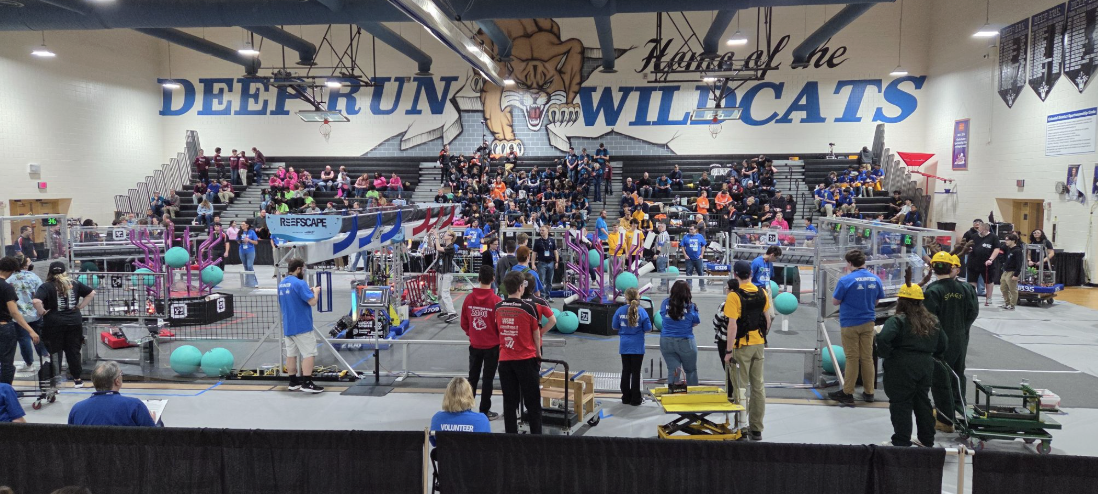
The final step in robotics, which might not be the case for all robotics, is competing. This is where your social skills come in. Going to robotics competitions is so much fun, speaking from experience. You get to meet so many people who are all interested in the same thing as you, you get to learn the stories of other robotics teams, and you might even gain knowledge for the next robot you make.
Also, at robotics competitions, so many people want to help you. If your team is having trouble with your robot, I can guarantee there is at least one person who has been in that situation before and is ready to help. Be ready to help others and share your experience creating this robot, because you might be judged on your design process. For example, last year our elevator (what we called the mechanism that moved vertically) was broken, and some students from other teams helped us repair it to working order.
Robotics, overall, allows you to gain so many skills that will help later in life, even if you don’t go into STEM. You will meet amazing people who are passionate about creating and want to see you thrive as much as they do.